NFC business cards UK buyers can rely on have gone from novelty to normal. Tap a card against a phone, a profile opens, contact details save in two seconds — no app, no typing, no stack of paper cards heading for a bin. This guide covers everything a UK buyer needs: how the technology actually works, what it costs here, which materials survive daily use, the GDPR position, and how to run them properly so they pay for themselves.
At Evrycard we have shipped NFC business cards UK-wide to more than 20,000 customers since 2024, so the numbers, materials and failure modes below are the ones we see every week — not theory.
What is an NFC business card? A UK primer
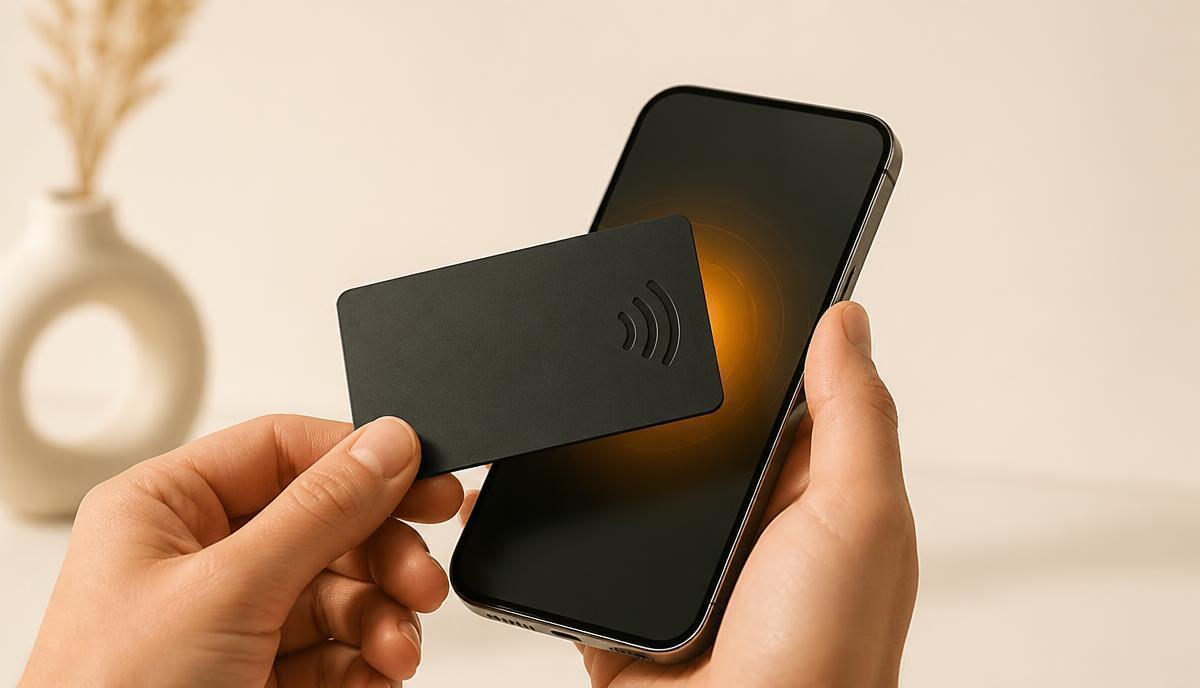
An NFC business card is a physical card with a small chip and antenna embedded inside it. When someone holds a smartphone near the card, the phone powers the chip wirelessly and reads a web address stored on it. That address opens your digital profile — name, job title, phone, email, website, socials, calendar link, payment details, whatever you choose to include.
The important distinction: the card is the trigger, not the content. The chip stores a link, and the link points at a profile you can edit at any time. Change job title, change number, change company — the printed card keeps working because nothing about your details is printed permanently into the chip.
NFC in plain English
NFC stands for Near Field Communication. It is a short-range radio standard, defined by the NFC Forum, operating at 13.56 MHz over a distance of roughly 1–4 cm. It is the same family of technology behind contactless payment, Oyster cards, and hotel door keys. The chip in a business card is passive — it contains no battery. The phone’s NFC reader emits a field, that field induces a tiny current in the card’s antenna, and the chip wakes up just long enough to hand over its stored data.
Because the range is measured in centimetres rather than metres, NFC cannot be read from across a room. That physical limit is a genuine security feature, not a limitation.
What actually happens when someone taps
- The phone’s NFC antenna detects the card and powers the chip.
- The chip returns an NDEF record — in practice, a URL.
- The phone displays a notification banner with the domain name.
- The recipient taps the banner and the profile opens in their browser.
- They save your contact with one button, which downloads a standard vCard.
Total elapsed time: about three seconds. No app installed on either side. No Bluetooth pairing. No account required by the person receiving your details.
Do NFC business cards UK-wide work on all phones?
Effectively yes, for any handset sold in the last several years.
- iPhone XS and newer (iOS 13+) — background NFC reading is always on. Hold the card near the top of the phone, near the camera bar, with the screen unlocked. No setting to enable.
- iPhone 7, 8 and X — these have NFC hardware but require the Control Centre NFC reader to be opened manually, or a QR scan instead.
- Android 5.0 and newer — virtually all have NFC. It sits under Settings → Connected devices → Connection preferences → NFC. It is usually on by default because contactless payment relies on it. The antenna is typically in the upper-middle of the back panel, though on some models it is central.
Ofcom’s market data puts UK smartphone ownership among adults at well over nine in ten, and the vast majority of those handsets are NFC-capable. In practice the failure mode you will meet is not “no NFC” — it is a thick phone case, a metal popsocket, or NFC switched off on an older Android. That is exactly why every serious card also carries a QR code.
Why QR fallback matters
A printed QR code on the reverse of the card resolves to the same profile URL. It costs nothing, works on every camera phone made in the last decade, and removes the awkward moment where a tap does not register. Treat the QR code as mandatory, not optional. Any supplier who omits it is optimising for looks over reliability.
NFC business cards vs QR code business cards vs paper
| Factor | NFC card | QR-only card | Traditional paper |
|---|---|---|---|
| Details editable after printing | Yes | Only with a dynamic QR | No |
| Works without camera app | Yes | No | N/A |
| Analytics on views | Yes | Yes, if dynamic | No |
| Reprint cost when details change | £0 | £0 if dynamic | Full reprint |
| Typical unit cost | £12–£40 | £0.10–£1 | £0.05–£0.50 |
| Perceived novelty in a meeting | High | Low | None |
| Lifespan | Years | Years | Until details change |
The honest summary: a QR-only card gives you most of the functional benefit for a fraction of the price. What NFC adds is the interaction itself. The tap is a conversation starter, it is faster than asking someone to open a camera, and it signals that your business pays attention to detail. For client-facing roles, that impression is the product. For a 200-person warehouse team, QR is the rational choice.
If you are weighing this up, our page on NFC business cards sets out the range and pricing, while digital business cards covers the software-only route with no physical card at all.
Materials for NFC business cards UK buyers actually choose
PVC and recycled PVC
The default. Credit-card thickness (0.76 mm to ISO/IEC 7810 ID-1), full-colour print on both faces, matte or gloss laminate. Cheapest to produce, widest colour range, and the chip sits comfortably inside the laminate layers. A recycled-PVC option is now standard from most reputable UK suppliers and reads identically. Expect £12–£20 per card at low volume.
Wood and bamboo
Laser-engraved rather than printed, so the design is monochrome by nature. Bamboo is the pragmatic choice — dimensionally stable, sustainably farmed, pleasant in the hand, and it does not interfere with the antenna at all. Grain variation means no two cards are identical, which some people love and others find inconsistent. £15–£28.
Metal
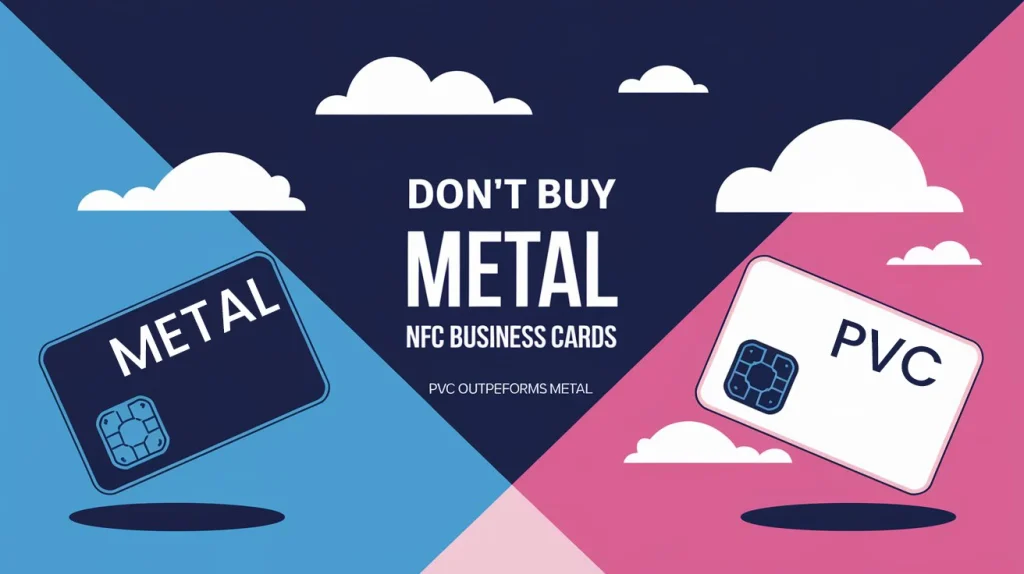
The category everyone asks about. Stainless steel and brushed black are the common finishes, usually 0.5–0.8 mm thick, laser-etched. The physics problem: metal is conductive and will shield an NFC antenna if the chip is simply sandwiched inside. Proper metal NFC cards solve this with a cut-out window or slot in the metal where the chip and antenna sit, backed with a non-conductive inlay. Cheap metal cards that skip this step either read intermittently or not at all.
Ask any metal supplier one question before buying: how is the antenna isolated from the metal body? If the answer is vague, walk away. Expect £30–£60 per card, and be aware that metal cards set off some airport scanners and are noticeably heavier in a wallet.
Which to choose
Across NFC business cards UK orders we fulfil, recycled PVC for teams and volume. Bamboo when sustainability is part of your brand story. Metal for a small number of senior, client-facing people where the card is doing reputational work. Mixing materials across one organisation is entirely normal — the profiles behind them are identical.
Chip types and why they matter
Most cards use an NXP NTAG chip. The number after NTAG indicates user memory:
- NTAG213 — 144 bytes. Enough for a short URL. Fine for cards using a link shortener.
- NTAG215 — 504 bytes. The sweet spot for business cards; room for a longer URL plus additional records.
- NTAG216 — 888 bytes. Useful if you want to store a vCard directly on the chip as a secondary record.
Two other specifications matter more than raw memory:
Read cycles. NTAG chips are rated for around 100,000 reads and 10 years of data retention. Even at ten taps a day, that is decades. Chip wear is not a realistic concern; physical damage to the card is.
Lock state. A chip can be write-protected so nobody can overwrite your URL with theirs. Reputable suppliers lock the chip before dispatch or give you the option. An unlocked card left on a desk can be rewritten by anyone with a free tag-writing app. Insist on locking, or on password protection if you want to retain the ability to rewrite later.
Static vs dynamic links — the decision that matters most
This single choice determines whether your cards keep working in three years.
A static card has your final destination written straight to the chip. If that URL ever changes — you rebrand, you move platform, your provider shuts down — every card is dead and needs reprinting.
A dynamic card writes a permanent redirect URL to the chip. That short link resolves through your provider to whatever profile you point it at today. You keep control of the destination forever, and you get analytics as a by-product because every tap passes through the redirect.
Always buy dynamic. The only scenario where static makes sense is a single-use event badge.
Related question worth asking your supplier: if I cancel my subscription, what happens to the cards? Good providers keep the redirect alive on a free tier or offer a data export. Poor ones brick your cards the day you stop paying.
What goes on a good digital profile
The card gets them to the page. The page has to do the work. A profile that converts is short, scannable and has one obvious next action.
- Photo and name — a real headshot, not a logo. People remember faces.
- Role and company — one line each.
- Save contact button — the single most important element. It must be above the fold and it must produce a standard .vcf file that lands cleanly in iOS and Android contacts.
- Direct actions — tap-to-call, tap-to-email, WhatsApp, LinkedIn.
- One primary CTA — book a call, view the portfolio, get a quote. One, not five.
- Lead capture — a short form so the exchange runs both ways. Without this you are giving details away and receiving nothing.
What to leave off: long biographies, a wall of social icons, autoplaying video, and anything that pushes the save-contact button below the fold. You have roughly eight seconds of attention while you are both still standing there.
Speed is not optional
The profile loads on mobile data, often on a weak signal in a venue basement. If it takes four seconds, the moment is gone. Look for providers who serve a lightweight page — compressed images, minimal JavaScript, and a page weight measured in tens of kilobytes rather than megabytes.
What NFC business cards UK buyers choose actually cost
NFC business cards UK pricing splits into two separate costs: hardware and software.
| Item | Typical UK price | Notes |
|---|---|---|
| Recycled PVC card, printed both sides | £12–£20 | Volume discounts from ~10 units |
| Bamboo card, engraved | £15–£28 | Monochrome only |
| Metal card | £30–£60 | Check antenna isolation |
| NFC sticker or tag | £3–£8 | For phone backs, laptops, till points |
| Profile subscription (individual) | £0–£5/month | Many include a free tier |
| Team plan with admin controls | £2–£6/user/month | Central branding and offboarding |
| UK delivery | ~£3.49 | Often free above a threshold |
Evrycard sits at the no-subscription end of that table: cards are £14.99–£79.99 one-time, and the digital profile, updates and analytics are included for life at £0/month.
VAT at 20% applies to both hardware and subscriptions for UK customers; check whether quoted prices are inclusive. Business purchases are a deductible expense, and VAT-registered businesses reclaim the input tax as normal.
Does it pay back?
Run the comparison honestly. A 500-card paper print run at £120, reprinted twice in two years because someone’s mobile number changed and the office moved, is £360 plus the design time. Ten NFC cards at £18 plus a £3/user/month team plan is £180 up front and £360 over two years for ten people — with no reprints, plus analytics, plus lead capture. It breaks even for anyone who is currently reprinting. It is a genuine cost increase for a business that prints once and never changes anything.
The stronger argument is not cost avoidance. It is that a paper card is discarded and unmeasurable, whereas a tap produces a saved contact, a tracked view, and often a captured lead.
The Evrycard range of NFC business cards UK customers buy most
Everything below is a one-time purchase. Evrycard has no monthly fees on any card — you buy the card once and edit the profile behind it for life.
| Card | Price | Best for |
|---|---|---|
| Evrycard Basic — Ready-Made NFC Card | £24.99–£27.99 | Getting started fast with an Evrycard-branded design and a fully editable profile |
| Evrycard Pro — Custom NFC Business Card | £39.99–£42.99 | Your logo, colours and layout — our best-selling card |
| Evrycard Engraved — Metal NFC Card | £69.99–£71.99 | Laser-engraved stainless steel; the executive option |
| Evrycard Colored — Metal NFC Card | £79.99 (was £99.99) | Anodised metal in your brand colour |
| Social cards — Instagram, TikTok, Facebook, Snapchat, X (Twitter) | £14.99–£18.99 | Creators and personal brands growing a following offline |
| Review cards — Google Review, Trustpilot | £14.99–£18.99 | Shops, salons, trades and hospitality collecting reviews at the counter |
Every Evrycard ships with custom design included, UK delivery in about three working days at £3.49, and a 30-day money-back guarantee. The full range sits on our NFC business cards page.
Team and volume pricing
For three cards or more, Evrycard for Teams uses volume pricing per card (ex VAT, minimum three cards):
| Material | 3–9 | 20–49 | 100–199 | 500+ |
|---|---|---|---|---|
| PVC | £35.99 | £32.99 | £24.99 | £18.99 |
| 60% recyclable PETG | £36.99 | £33.99 | £25.99 | £19.99 |
| Wood / bamboo | £47.99 | £41.99 | £32.99 | £23.99 |
| Engraved metal | £64.99 | £56.99 | £44.99 | £32.99 |
| Coloured metal | £71.99 | £63.99 | £51.99 | £39.99 |
Team accounts add central administration, bulk ordering, instant reassignment when an employee leaves, and dedicated onboarding — still with no recurring fees. Full breakdown on our pricing page.
How ordering works
- Purchase and customise — pick a card and upload your logo or artwork at checkout.
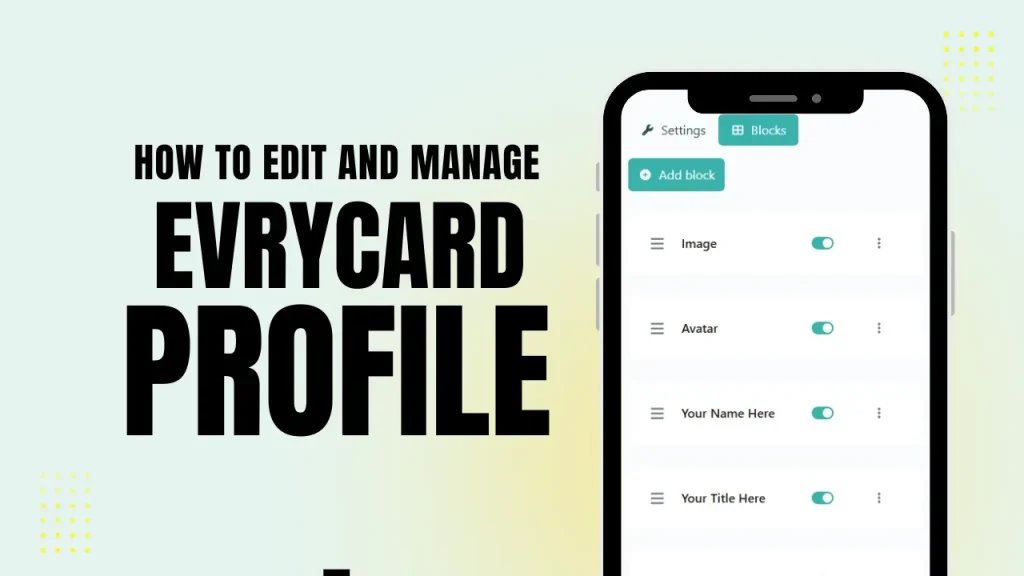
- Build your profile — add contact details, links, socials and your call to action in the Evrycard dashboard.
- Receive your card — programmed, locked and ready to tap on arrival, typically within three working days in the UK.
GDPR and UK data protection
NFC business cards touch personal data in two directions, and UK GDPR plus the Data Protection Act 2018 apply to both. The ICO’s UK GDPR guidance is the authoritative reference, and the ICO guidance on PECR and direct marketing covers follow-up email.
Your own details
Publishing your work contact details on your own profile is straightforward — you are the data subject and you are choosing to publish. Where it needs care is staff cards issued by an employer: the business is the controller, the employee’s name, photo and direct line are personal data, and the lawful basis is normally legitimate interests. Document it, and give staff a route to object to, say, having their photo published.
Details you collect
The moment your profile has a lead-capture form, you are processing someone else’s personal data and the obligations bite:
- Lawful basis — consent for marketing follow-up, or legitimate interests for a genuine B2B enquiry. Be clear which.
- Transparency — a privacy notice linked from the form, before submission.
- Data minimisation — ask for name, email and one contextual field. Not date of birth.
- PECR — separate from GDPR and frequently missed. Unsolicited marketing email to an individual or sole trader needs consent or a soft opt-in. Corporate addresses have more latitude but still require an opt-out in every message.
- Retention — set a period and delete on schedule. “Forever” is not a retention policy.
- Data location — ask your provider where profiles and leads are stored. UK or EEA hosting keeps international transfer questions simple.
Two provider questions worth asking directly: do you offer a Data Processing Agreement, and can I export and delete all lead data on demand? A no to either is disqualifying for business use.
Analytics and cookies
Tap counts and view counts collected without cookies are low risk. If the profile drops analytics or advertising cookies, PECR requires consent before they are set. Prefer a provider using cookieless, aggregated measurement — it is simpler and it loads faster.
Rolling NFC cards out across a team
Individual purchases of NFC business cards UK teams use are simple. Teams need a small amount of process, or you end up with forty inconsistent profiles and no way to switch one off when someone leaves.
- Lock the template first. Logo, colours, fonts, button style and the standard CTA defined centrally. Individuals fill in their own details only.
- Standardise the fields. Agree what every profile carries — headshot, role, direct line, email, LinkedIn, booking link — before ordering a single card.
- Pilot with five people. Different departments, different phones. Fix the problems at five cards, not at fifty.
- Order in one batch. Consistent print run, consistent colour, one delivery.
- Brief the team. A five-minute demo. Where the antenna is on their phone, how to hand the card over, what to say. Most rollouts underperform because nobody was shown how to use them.
- Own offboarding. When someone leaves, the admin repoints their redirect to a general company page or disables it. This is the single biggest advantage over paper and the one most often forgotten.
The handover technique
Do not hand the card over and hope. Hold it and say “may I?”, then tap their phone yourself against the card. The interaction takes two seconds, it always works because you know where to hold it, and it lands far better than watching someone fumble. If their phone is older, flip to the QR side without comment.
Where NFC cards work hardest
- Trade shows and exhibitions — hundreds of conversations, and each tap can capture a lead in return rather than accumulating a shoebox of paper.
- Estate agency and property — link straight to current listings, and add an NFC tag to the For Sale board.
- Trades and field service — plumbers, electricians, gas engineers. Tap at the door, link to reviews and a booking form. Cards survive a toolbox.
- Hospitality — table tags for menus, reviews and Wi-Fi.
- Recruitment and sales — volume conversations where lead capture and analytics are the point.
- Healthcare and consultancy — a professional, low-key way to share credentials and a booking link.
Troubleshooting: when a card does not read
- Nothing happens on iPhone — screen must be awake and unlocked. Hold the card to the very top of the phone. Older iPhones need the Control Centre NFC reader.
- Nothing on Android — check NFC is enabled in settings, then locate the antenna, which is often centre-back rather than top.
- Thick case or metal accessory — remove the case and retest. Metal popsockets and card-holder cases block the field completely.
- Reads but the page fails — the chip is fine and the destination URL is the problem. Check the redirect and, if applicable, the subscription status.
- Intermittent on metal cards — usually poor antenna isolation. Approach slowly and squarely; if it is still unreliable, the card is badly made.
- Worked, now dead — chips rarely fail. Suspect a sharp bend, a hole punched through the antenna, or a card that went through a wash cycle.
Care and lifespan
Keep the card flat. The antenna is a fine wire loop running around the perimeter, and a hard crease can sever it. Do not punch a hole in it for a lanyard unless the manufacturer has designed a punch zone. Wipe with a damp cloth, never solvent, which lifts print. Water alone will not harm the chip, but repeated flexing will. Realistically a PVC card looks tired after two to three years of pocket use; metal and bamboo age better.
Choosing a supplier for NFC business cards UK checklist
- Dynamic links, not static writes
- Chip locked or password-protected before dispatch
- QR fallback printed as standard
- UK or EEA data hosting, with a DPA available
- Clear answer on what happens to cards if you stop paying
- Team admin: central branding, and the ability to disable a profile instantly
- Lead capture with export
- Profile page that loads in under a second on mobile data
- Real UK support contact, not just a form
- Physical sample or a proof before a volume run
Frequently asked questions
Do NFC business cards need an app?
No. The person tapping needs nothing installed — the profile opens in their normal browser. You may use an app or web dashboard to edit your own profile, but that is your side only.
Are NFC business cards safe?
Yes. The chip stores a URL, nothing more. It cannot install software, it holds no payment credentials, and the 1–4 cm range means it cannot be read covertly at a distance. The only real risk is an unlocked chip being overwritten, which is why write-protection matters.
Can I change my details after printing?
With a dynamic card, yes — instantly and as often as you like, on every card already in circulation. With a static card, no.
Do they work without internet?
The tap itself works offline, but opening the profile needs a data connection. Some providers also write a basic vCard record to the chip as a fallback, which saves contact details with no connection at all — worth asking about if you exhibit in convention centres with poor signal.
How long do they last?
The chip is rated for roughly 100,000 reads and 10 years of data retention. The limiting factor is physical wear on the card body, typically two to five years depending on material.
Are they worth it for a small business?
If you attend events, meet clients in person, or change details more than once every couple of years, yes. If you hand out fifty cards a year and nothing ever changes, paper is still cheaper — though the impression a tap makes is the reason many one-person businesses buy anyway.
Can one card serve several people?
Not sensibly. One card, one profile. For shared spaces — a reception desk, a shop counter, a vehicle — use an NFC tag pointing at a company profile instead.
Is a metal card worth the extra?
For a senior, client-facing role where the card is part of the impression, yes. Check the antenna isolation before buying, and be aware of the added weight.
Where to go next
If you want a card in hand this week, choose the Evrycard Pro at £39.99 for full custom branding, or the entry-level Basic at £24.99.
Ordering for three or more people? Explore our digital business cards for teams for centralised management and tier discounts.
If you prefer to start with a digital profile alone before ordering hardware, explore our virtual business cards.
Either way, the principles hold: buy dynamic, insist on a QR fallback, lock the chip, keep the profile fast, and make sure someone owns offboarding. Get those five right and the cards will still be working in three years.